Projects
Professional self-help and mental health support mobile application
mental health/
mobile/
flutter/
AI/
health/
EdTech/
nonprofit
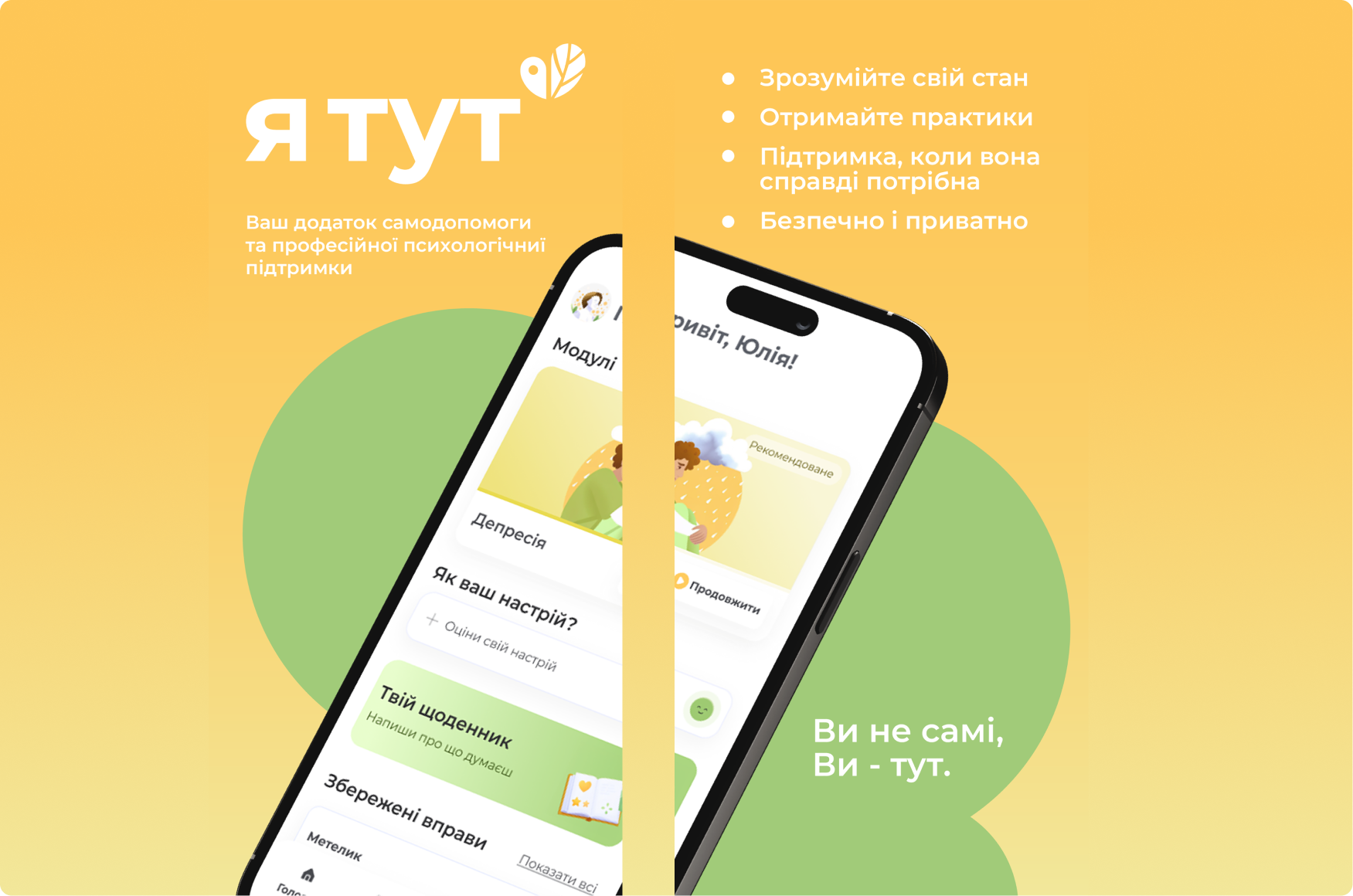
We partnered with UA Mental Help, a Ukrainian non-profit that has already supported over 13,700 people through 31,000+ consultations, to design and build "Ya Tut" — a cross-platform mobile application that makes psychological self-help accessible anytime, anywhere. The app combines evidence-based content, AI-powered assistance, and clinical screening tools to help users manage anxiety, stress, and emotional burnout while knowing when to seek professional support.
About the project
Scaling Mental Health Support Beyond 1-on-1 Sessions
Mental health remains one of the most stigmatized and underserved areas in Ukraine. Despite growing demand for psychological support, many people face significant barriers: long wait times for specialists, social stigma around seeking help, and limited access to quality resources outside major cities.
UA Mental Help had built an impressive network of 80+ mental health specialists and conducted thousands of consultations. But they recognized that one-on-one sessions alone couldn't scale to meet the needs of an entire population dealing with stress, anxiety, and trauma.
Main goals for building mobile app included:
Provide immediate, 24/7 access to evidence-based self-help resources
Lower the barrier to entry for people hesitant to seek traditional therapy
Help users understand their mental state through validated clinical tools
Deliver a warm, non-clinical experience that feels supportive rather than medical
Approach
User-Centered Development Process
We followed a structured, user-centered approach to ensure the app truly meets the needs of people seeking mental health support. Working closely with UA Mental Help's team of psychologists and methodologists from day one, we mapped user journeys, defined safety protocols, and established a content strategy rooted in evidence-based therapeutic approaches.
User Research & Surveys
We started the project by learning about the real needs of people looking for mental health support. We ran user surveys, asked about emotional triggers, daily struggles, trust issues, and what they expect from digital mental health tools. What we learned shaped our product scope, feature priorities, tone, and user experience decisions.
Wireframes & User Stories Documentation
After reviewing our research, we turned user needs into simple wireframes and clear user stories. The wireframes showed the main screens, navigation, and content layout, helping us keep things clear and easy to use. At the same time, the user stories described what each feature should do, including special cases and what counts as done. This documentation provided everyone, including designers, developers, and stakeholders, with a single reference point throughout the project.
Design Exploration
We tried three different design styles, each with its own emotional and visual approach to mental health support. The styles used different colors, fonts, icons, and moods, from calm and simple to more expressive and warm. We showed each concept to users and stakeholders to see how design choices affected trust, comfort, and credibility.
Design Selection & Refinement
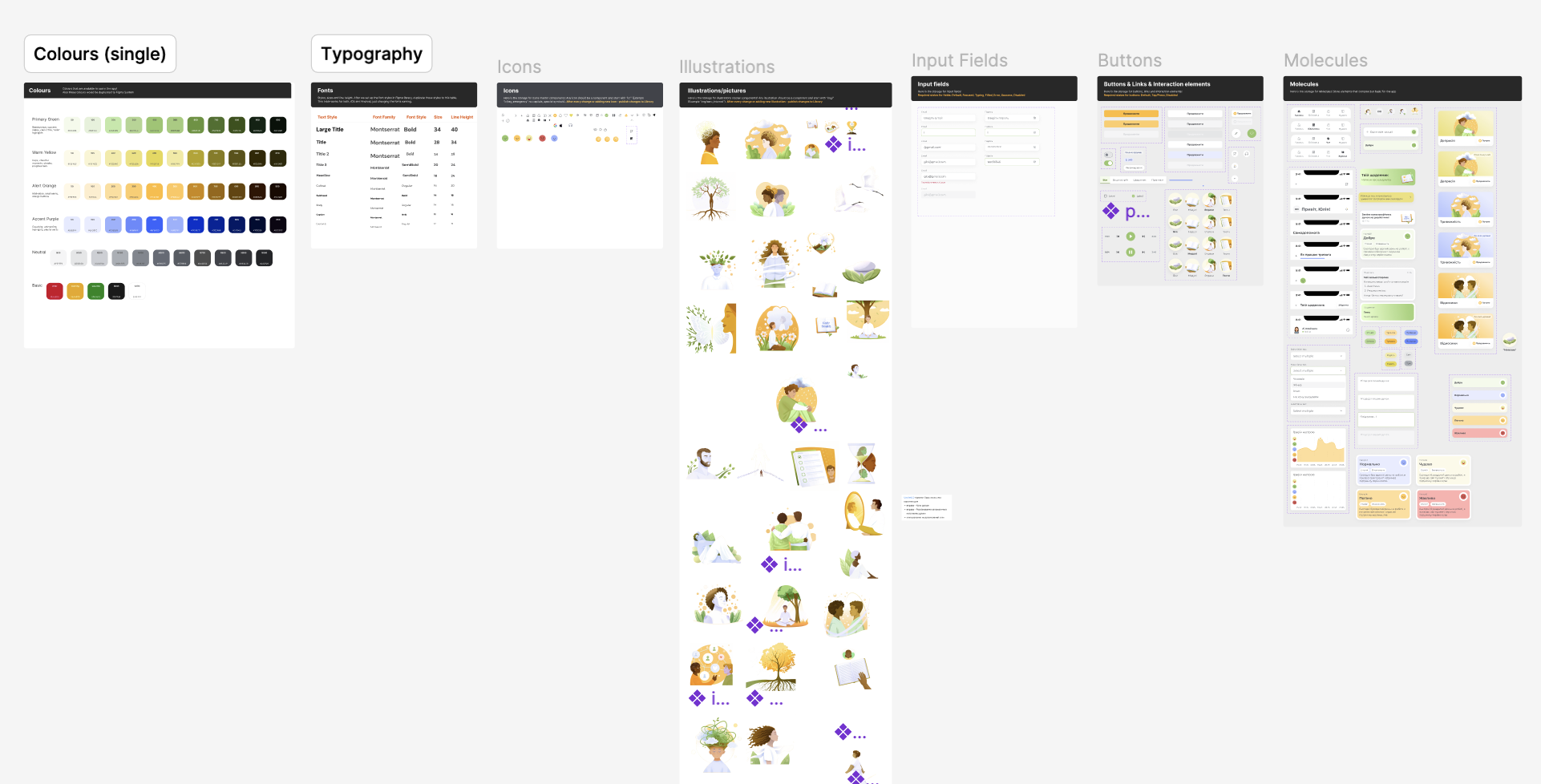
In workshops and feedback sessions with users and the UA Mental Help team, we picked the design that best balanced warmth, accessibility, and clinical credibility. We then turned this concept into a clear design system with reusable UI parts, spacing rules, font sizes, and color guidelines. This system kept the look consistent and made it easy to scale the product.
Mobile app Development
We developed the mobile app and backend at the same time to speed up delivery and stay in sync. The app was built with Flutter, so it works on both iOS and Android from one codebase. The backend used modern, scalable web tech. Frontend and backend teams worked closely to define APIs, deliver features step by step, and keep feedback quick.
Content Creation with Psychologists
As we built the app, licensed psychologists worked with the product team to create content based on clinical standards. They developed self-help programs, guided exercises, prompts, questionnaires, and therapy techniques using proven psychological methods. By working together, we made sure the content and technology grew together, making the product both strong and clinically sound.
AI Integration
We added an AI assistant to help users between self-help activities. We designed clear prompts, set strict safety and ethical rules, and put in place monitoring to make sure responses stayed caring, supportive, and not diagnostic. The AI is meant to support users and offer guidance, not replace professional mental health care.
Quality Assurance
We ran a full quality assurance phase to make sure the app was reliable, safe, and accessible. This included testing how it works, checking accessibility, reviewing security and privacy, and making sure it worked on different devices and platforms. We paid special attention to tricky cases and sensitive user flows common in mental health apps.
Testing & Polishing
After QA and internal testing, we improved the user experience by making the app easier to use, faster, and fixing bugs. We polished animations, loading screens, and interactions so the app feels calm, responsive, and easy to use. This helps users get support without any hassle or confusion.
Beta Release (Early Adopters)
We released the app to a small group of early adopters to test how it worked in real life. During this time, we gathered feedback, tracked engagement and retention, and watched how users interacted with the content and AI assistant. What we learned helped us make final changes to the user experience and content.
Final Production Release
After the beta was successful, we launched the app on the App Store and Google Play. We improved the store listings, set up monitoring tools, and created support processes to make sure the public launch was stable and well-supported.
Post-launch Support
After launch, we kept a close eye on performance, analytics, and user feedback. We continue to make improvements, update content with help from psychologists, and refine features and flows. This way, the product grows responsibly with user needs and clinical best practices.
Outcome
Ya Tut launched on both the App Store and Google Play, extending UA Mental Help's mission into the digital space and making mental health resources accessible anytime, anywhere.
Warm, Approachable Design
Mental health apps often feel clinical or overwhelming. We created an interface that feels like a supportive companion: soft colors, intuitive navigation, and encouraging micro-copy. Every feature is accessible within 2-3 taps, minimizing cognitive load for users who may already be in a vulnerable state.
Self-Help Content Library
Structured modules covering anxiety, depression, stress management and relationships. Each module includes theoretical materials, practical exercises, audio-guided relaxation techniques, and reflective prompts that save to a personal journal, all in accessible, everyday language.
AI-Powered assistance
A GPT-powered assistant helps users navigate resources based on their emotional state. It provides warm, empathetic responses with strict safety guardrails: never diagnosing, always maintaining boundaries, and recognizing when to recommend professional help.
Clinical Screening & Mood Tracking
Validated questionnaires (PHQ-9, GAD-7) with automatic scoring and personalized recommendations. Daily mood check-ins with emotion tagging, journaling for emotional processing, and smart notifications that gently remind users to maintain healthy habits.
(iOS & Android)
Support
Content
Supported
Our ratings stand strong across prominent marketplaces dedicated to sourcing business services


Based on 17 reviews


Based on 47 reviews





Contact
We're here to bring Your Vision to Life!
Tell us what you're building — a mobile app, an AI integration, or scaling an existing product. We'll map out the next steps with you.
- Free 30-minute discovery call — no commitment
- A real reply from our team within 24 hours
- NDA on request — your idea stays yours
Prefer email?
[email protected]Quick connect
Share a few details about your project and we'll get back to you with next steps.